What is the difference between a hearse and a funeral family car in Oregon?
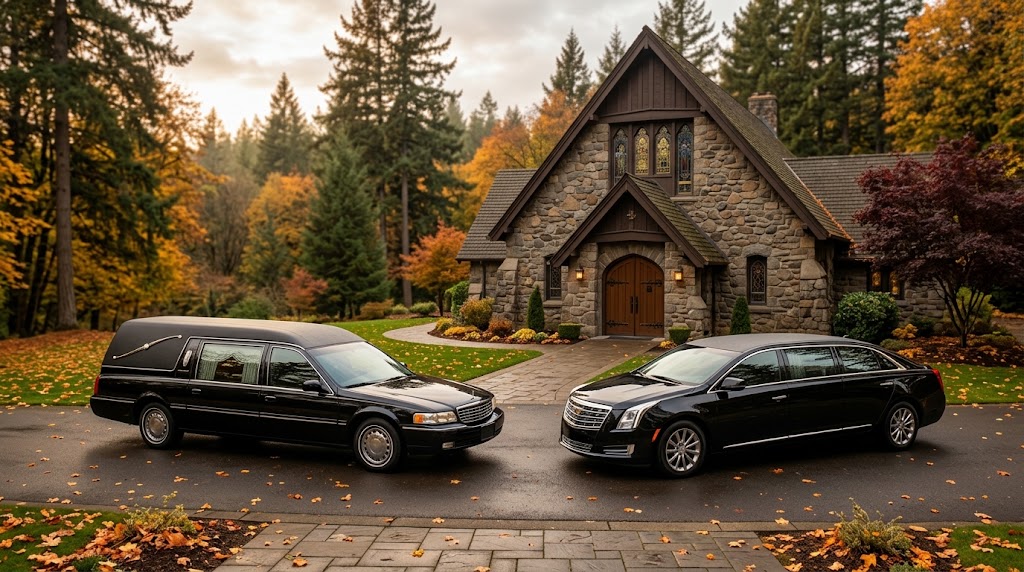
A hearse carries the person who has died, and a funeral family car carries the people who are mourning them. In Oregon, the two vehicles also fall under different rules, are usually booked through different providers, and play different roles in the procession.
Families planning a funeral often hear both terms for the first time from a funeral director. American Town Car provides chauffeured family transportation in the Portland area, and this guide explains what each vehicle does, who can drive it, and how to arrange both.
Hearse vs Funeral Family Car: Quick Comparison
The simplest way to see the difference is side by side.
|
Hearse (funeral coach) |
Funeral family car |
|
|
Carries |
The casket and the deceased |
The immediate family and close mourners |
|
Vehicle type |
Purpose-built coach with a long rear compartment |
Sedan, SUV, limousine, or passenger van |
|
Usually provided by |
The funeral home |
The funeral home or a chauffeured car company |
|
Who oversees it in Oregon |
State Mortuary and Cemetery Board (for paid funeral work) |
City for-hire rules, such as Portland's private for-hire permit |
|
Place in the procession |
Near the front, behind the lead car |
Directly behind the hearse |
|
Other uses that day |
Funeral home to service to cemetery |
Home, service, cemetery, reception, airport |
What Is a Hearse?
A hearse, also called a funeral coach, is a vehicle built to carry a casket. Coachbuilders start with a luxury car or SUV chassis and add a long, enclosed rear compartment with rollers and fittings that hold the casket in place.
The hearse moves the deceased from the funeral home to the church or chapel and then to the cemetery. It does not carry mourners. Apart from the driver, and sometimes a funeral director, nobody rides in a hearse.
What Is a Funeral Family Car?
A funeral family car is a passenger vehicle that carries the immediate family during the funeral. It can be a black sedan, an SUV, a stretch limousine, or a van for larger families.
The family car keeps close relatives together, gives them privacy between stops, and spares them from driving. Unlike the hearse, it often works all day, covering pickups at home, the service, the burial, and the reception.
Who Can Drive a Hearse in Oregon?
In Oregon, paid funeral service work, including handling and transporting the deceased, requires a license from the State Mortuary and Cemetery Board. That is why the hearse is normally driven by a funeral home employee or funeral director.
Oregon law also lets families care for their own dead. A relative or friend who does this work without payment counts as a "person acting as a funeral service practitioner," according to the National Home Funeral Alliance summary of Oregon law. The same summary notes that remains held longer than 24 hours must be embalmed or refrigerated.
In practice, a chauffeured car company cannot carry the deceased. Its role is the living: the family and guests. For questions about moving remains, talk to your funeral director or the Oregon Mortuary and Cemetery Board.
What Rules Apply to Funeral Family Cars in Portland?
A funeral family car is regulated as passenger transportation, not as funeral service. Inside Portland city limits, companies that drive passengers for pay, including limousines, executive sedans, and town cars, must hold a private for-hire permit from the Portland Bureau of Transportation.
The permit process covers the company, its vehicles, and its drivers, including driver background checks. When you book a family car, it is reasonable to ask whether the company is permitted and insured. American Town Car is licensed and carries $5 million in liability coverage. [CLIENT TO CONFIRM: current PBOT permit status to state on the page.]
Where Each Vehicle Goes in a Funeral Procession
The hearse and the family car sit next to each other in a funeral procession, with the family directly behind their loved one. A typical procession order is:
-
Lead car, often driven by the funeral director, which guides the line.
-
Hearse, carrying the casket.
-
Funeral family car, carrying the immediate family.
-
Additional family cars, for extended family if booked.
-
Guests in their own vehicles.
Order can vary by family, faith, or funeral home, and the funeral director usually sets it on the day.
Who Rides in the Funeral Family Car?
The funeral family car is usually reserved for the people closest to the deceased. That typically means the spouse or partner, children, and parents, sometimes with siblings or grandchildren.
If the family is large, a second car keeps everyone together without crowding. Pallbearers and clergy may also ride in a separate car, depending on the family's wishes.
Do You Book the Hearse and the Family Car Separately?
You book the hearse through the funeral home, but you can book the family car either through the funeral home or directly. Under the federal Funeral Rule, funeral homes list hearse and limousine prices on their General Price List, and the Funeral Consumers Alliance notes that the limousine is often supplied by an outside vendor.
Booking the family car directly gives you more control over the vehicle, the hours, and the extra trips. With hourly chauffeur service, one driver stays with the family from the first pickup to the reception, and the car waits during the service and burial.
Choosing the Right Funeral Family Car
The right family car depends on how many people need to ride together. American Town Car's luxury fleet includes options for small and large families:
|
Group size |
Vehicle |
Passengers |
|
One or two mourners |
Cadillac XTS or Mercedes 580 sedan |
Up to 3 |
|
Immediate family |
GMC Yukon XL or Cadillac Escalade ESV |
Up to 6 |
|
Extended family |
Mercedes Sprinter |
Up to 14 |
|
Large group |
Mini bus |
Up to 27 |
How American Town Car Supports Families on a Funeral Day
American Town Car provides the family side of funeral transportation across the Portland metro and south Washington, as part of its chauffeured services in Portland. The company has served Portland since 2008, and every chauffeur passes a background check and hands-on training.
The same team can also meet relatives flying in for the funeral through PDX airport transportation, so the family does not have to leave the planning to make an airport run.
Frequently Asked Questions
Is a funeral coach the same as a hearse?
Yes. Funeral coach is the industry term for a hearse. Both describe the vehicle that carries the casket.
Can family members ride in the hearse?
Generally no. A hearse is built to carry the casket and has seating only for the driver and sometimes one passenger, such as the funeral director. The family rides in the funeral family car right behind it.
Can a limousine company drive the hearse in Oregon?
No. Paid handling and transport of the deceased is licensed funeral service work in Oregon, so the hearse is run by a licensed funeral establishment. A chauffeured car company provides only the family and guest vehicles.
Does the funeral home provide the family car?
Some funeral homes do. If they offer one, its price appears on their General Price List. Families can also book a family car directly from a chauffeured car company.
How many people fit in a funeral family car?
It depends on the vehicle. A sedan seats up to 3, a large SUV up to 6, and a Sprinter van up to 14. Large families often book two vehicles.
Does the family car wait during the service?
With hourly booking, yes. The chauffeur waits during the service and burial, then takes the family to the reception or home.
Book a Funeral Family Car in Portland
The funeral home takes care of the hearse, and a chauffeured family car takes care of everyone else. To arrange a family car for a service in Portland, Beaverton, Lake Oswego, or Vancouver, request a free quote or call (503) 530-9199.