
What Can You See on a Private Columbia River Gorge Tour, From Multnomah Falls to Hood River?
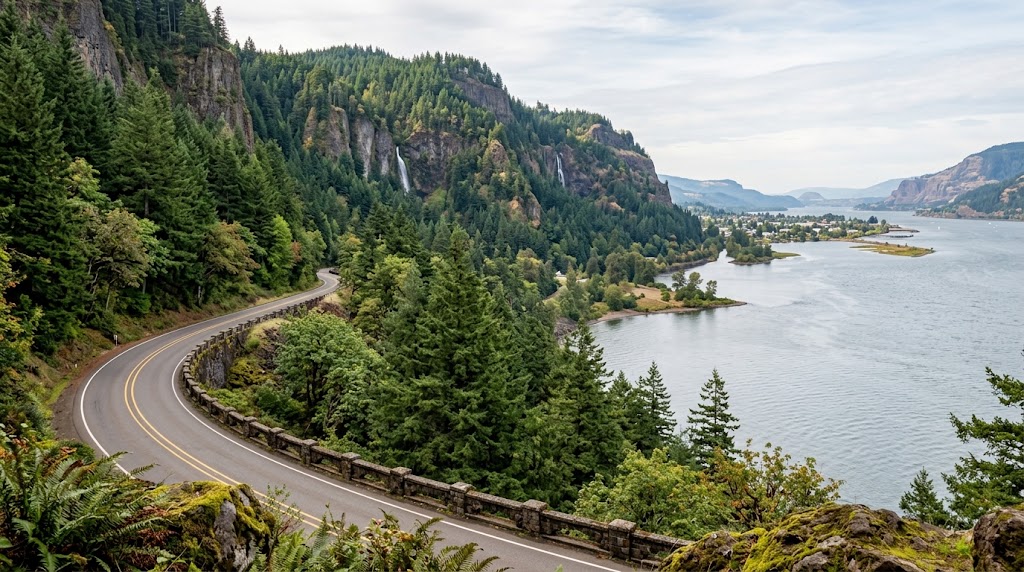
On a private Columbia River Gorge tour from Portland, you can see Vista House at Crown Point, a chain of waterfalls including Latourell, Bridal Veil, Wahkeena and Multnomah Falls, then Bonneville Dam, Cascade Locks and the orchards of Hood River. Most of the waterfalls sit along the Historic Columbia River Highway, the scenic road that winds through the western Gorge, while Hood River lies about an hour east of the city. American Town Car drives private Gorge days from Portland, and this guide walks through every major stop in order, with timing, 2026 updates and tips for planning the day.
Columbia River Gorge Tour Stops at a Glance
A full Gorge day usually covers eight to ten stops from west to east, finishing in Hood River for a late lunch or the Fruit Loop.
|
Stop |
What you will see |
Time to allow |
|
Portland Women's Forum Viewpoint |
The classic view east toward Crown Point and the river |
15 minutes |
|
Vista House at Crown Point |
Historic stone rotunda 733 feet above the river |
30 minutes |
|
Latourell Falls |
224-foot drop over columnar basalt |
20 to 45 minutes |
|
Shepperd's Dell and Bridal Veil Falls |
Short walks to two quieter falls |
30 minutes |
|
Wahkeena Falls |
Tiered falls beside the highway |
15 minutes |
|
Multnomah Falls |
620-foot falls, Benson Bridge and historic lodge |
60 to 90 minutes |
|
Horsetail Falls |
Roadside falls just east of Multnomah |
10 minutes |
|
Bonneville Dam and Fish Hatchery |
Fish ladders, salmon and Herman the Sturgeon |
45 to 60 minutes |
|
Cascade Locks |
Bridge of the Gods and riverside lunch |
30 to 60 minutes |
|
Hood River and the Fruit Loop |
Town, orchards, farm stands and Mount Hood views |
2 to 3 hours |
Every stop on this list can be built into a private day on our planned private Oregon tours service [PAGE NOT LIVE], with the chauffeur adjusting the order around your group, the weather and parking.
Vista House at Crown Point
Vista House is the first major stop and the most photographed building in the Gorge, a stone rotunda sitting 733 feet above the Columbia River on Crown Point.
Opened in 1918 as a memorial to Oregon pioneers and a rest stop for early motorists, Vista House gives a sweeping view east up the river and west toward Portland. On clear days you can see far up the Gorge and across to Washington. Inside are exhibits on the history of the highway and the Gorge, and the observation deck is worth the short climb.
For the best photo of Vista House itself, stop first at the Portland Women's Forum State Scenic Viewpoint a little to the west. From there, Crown Point and the river make the postcard view most visitors recognize.
The Historic Columbia River Highway Waterfalls
Below Crown Point, the Historic Columbia River Highway drops through tight curves into a corridor of waterfalls, many just steps from the road.
Latourell Falls
Latourell Falls is the first big waterfall on the route, dropping 224 feet over a wall of columnar basalt streaked with yellow-green lichen. A short paved path leads to the base viewpoint, while a loop trail climbs to the upper falls for guests who want a longer walk.
Shepperd's Dell and Bridal Veil Falls
Shepperd's Dell is a quick stop with a view down into a mossy gorge, while Bridal Veil Falls sits at the end of a short trail below the highway. Both are quieter than Multnomah Falls and give a sense of how many waterfalls line this stretch of road.
Wahkeena Falls
Wahkeena Falls tumbles in tiers right beside the highway, a short distance west of Multnomah Falls. It makes an easy photo stop and the starting point for a loop trail for guests who want to hike between the two falls.
Multnomah Falls
Multnomah Falls is the highlight of every Gorge tour, a 620-foot, two-tier waterfall with the historic Benson Bridge crossing between the upper and lower falls.
The Benson Bridge was built in 1914 and spans the falls at about the 105-foot mark, and the stone Multnomah Falls Lodge was completed in 1925. A paved path climbs from the lodge to the bridge, and a longer trail continues to the top of the falls for strong walkers.
What to know about Multnomah Falls in 2026
Three updates matter for 2026 visits. In summer, the I-84 Exit 31 parking lot requires a timed use permit for private vehicles from 9 a.m. to 6 p.m., May 22 through September 7, and a permit still does not guarantee a space. The public restrooms inside the lodge are under renovation through November 2026. And the Historic Columbia River Highway reopened east of Multnomah Falls in May 2026 after repairs to its century-old viaducts.
Vehicle size limits on the Historic Highway
The restored viaducts beside Multnomah Falls are open only to vehicles under 35 feet long. A sedan, SUV or Mercedes-Benz Sprinter van fits easily, but full-size coaches cannot use this section and must reach the falls from I-84 instead. This is one reason small private vehicles see more of the waterfall corridor than large bus tours.
Horsetail Falls and the Eastern Waterfall Corridor
Just east of Multnomah Falls, Horsetail Falls pours in a single ribbon beside the road, making it one of the easiest waterfalls to see without leaving the vehicle. With the highway now reopened east of Multnomah, it is back on most private tour routes before the road rejoins I-84.
Bonneville Dam and Fish Hatchery
Bonneville Dam and the neighboring fish hatchery are a favorite stop for families, about 40 miles east of Portland.
At the hatchery, the Lower Columbia Estuary Partnership notes that visitors can see Chinook and coho salmon programs, feed rainbow trout, and view sturgeon, including Herman the Sturgeon, a giant about 10 feet long. Next door, the dam's visitor center has an underwater window where you can watch adult salmon swim up the fish ladder in season.
Cascade Locks and the Bridge of the Gods
Cascade Locks is a small river town a few minutes east of Bonneville, best known for the Bridge of the Gods, a steel bridge that crosses the Columbia to Washington. It makes a good lunch stop on the waterfront, with views of the bridge and the river.
Hood River and the Fruit Loop
Hood River is the natural end point of a Gorge tour, about 62 miles from Portland according to the Travel Portland region map, with a lively downtown, river views and Mount Hood rising to the south.
The Hood River Fruit Loop
The Hood River Fruit Loop is a 35-mile scenic drive south of town through pear and apple orchards, lavender farms, farm stands, cideries and wineries, with Mount Hood in view for much of the route. Summer brings cherries and berries, while late summer and fall bring pears, apples and pumpkins. A private chauffeur lets you stop at as many farm stands as you like without worrying about the drive.
Hood River wineries and breweries
Hood River also sits at the center of the Columbia Gorge wine region, with tasting rooms in town and estates in the surrounding hills. If wine is a priority, see our guide to Oregon wine regions beyond the Willamette Valley [LINK PENDING PUBLISH], which covers the Gorge's wineries in more detail.
How Long Does a Private Gorge Tour Take?
A private Gorge tour from Portland to Hood River usually takes seven to eight hours. Here is a sample day:
|
Time |
Stop |
|
9:00 a.m. |
Pickup in Portland |
|
9:40 a.m. |
Portland Women's Forum Viewpoint and Vista House |
|
10:30 a.m. |
Latourell, Shepperd's Dell and Bridal Veil Falls |
|
11:15 a.m. |
Wahkeena and Multnomah Falls |
|
12:45 p.m. |
Horsetail Falls, then Bonneville Dam and Fish Hatchery |
|
2:00 p.m. |
Lunch in Cascade Locks or Hood River |
|
3:00 p.m. |
Hood River Fruit Loop or downtown |
|
5:00 p.m. |
Return to Portland on I-84 |
|
6:00 p.m. |
Drop-off |
For a shorter day, stop at Multnomah Falls and turn back for a four- to five-hour waterfall tour. For a longer one, add Rowena Crest and the Mosier area east of Hood River, or loop south past Mount Hood on the way home.
Why Choose a Private Gorge Tour?
A private tour lets you stay longer at the falls you love, skip the ones you do not, and avoid the parking hunt at the busiest stops. Your chauffeur drops you at the entrance and meets you when you are ready, which matters at Multnomah Falls on summer weekends.
If you are weighing a private day against a trolley or bus, see our comparison of a private Columbia River Gorge tour versus a group bus tour [LINK PENDING PUBLISH].
Best Time of Year for a Gorge Tour
-
Spring: the waterfalls run strongest after winter rain and snowmelt, and wildflowers bloom on the eastern bluffs.
-
Summer: warm, dry days and fruit season on the Fruit Loop, but the most crowds and the Multnomah Falls permit season.
-
Fall: golden leaves, apple and pear harvest, and fewer visitors after Labor Day.
-
Winter: quiet trails and dramatic ice on the falls, though ice storms can close roads, so check conditions first.
For other day trips you can pair with the Gorge, see our guide to the best private tours in Oregon from Portland [LINK PENDING PUBLISH].
Skip the Parking Hunt at Multnomah Falls
The Gorge is at its best when you can stop wherever the view is good and leave the driving to someone else. Skip the parking hunt at Multnomah Falls and book a private Gorge tour with a route built around your favorite stops.
FAQ
How far is Multnomah Falls from Portland?
Multnomah Falls is about 30 miles east of Portland, roughly 35 to 45 minutes by I-84 or longer on the scenic Historic Columbia River Highway with stops.
Do you need a permit to visit Multnomah Falls?
In summer, yes, if you park a private vehicle in the I-84 Exit 31 lot. In 2026, timed use permits are required from 9 a.m. to 6 p.m. between May 22 and September 7, and a permit does not guarantee a parking space.
Can large vans and buses drive the Historic Columbia River Highway?
The restored viaducts near Multnomah Falls are open only to vehicles under 35 feet long. Sedans, SUVs and Sprinter vans fit, while full-size coaches must use I-84.
Is Vista House open to visitors?
Vista House is open to visitors for much of the year, with exhibits inside and an observation deck. Hours vary by season, so check before you go.
What is the best time of year to see the Columbia Gorge waterfalls?
Spring, when rain and snowmelt make the waterfalls run strongest. Fall is a close second for color and smaller crowds.
Can you combine the Gorge with Mt. Hood in one day?
Yes. Many private tours follow the Gorge to Hood River, then return south past Mount Hood on Highway 35 and US 26, which makes a full loop in about nine to ten hours.