
San Diego Airport to Cruise Port: Terminal-by-Terminal Transfer Guide
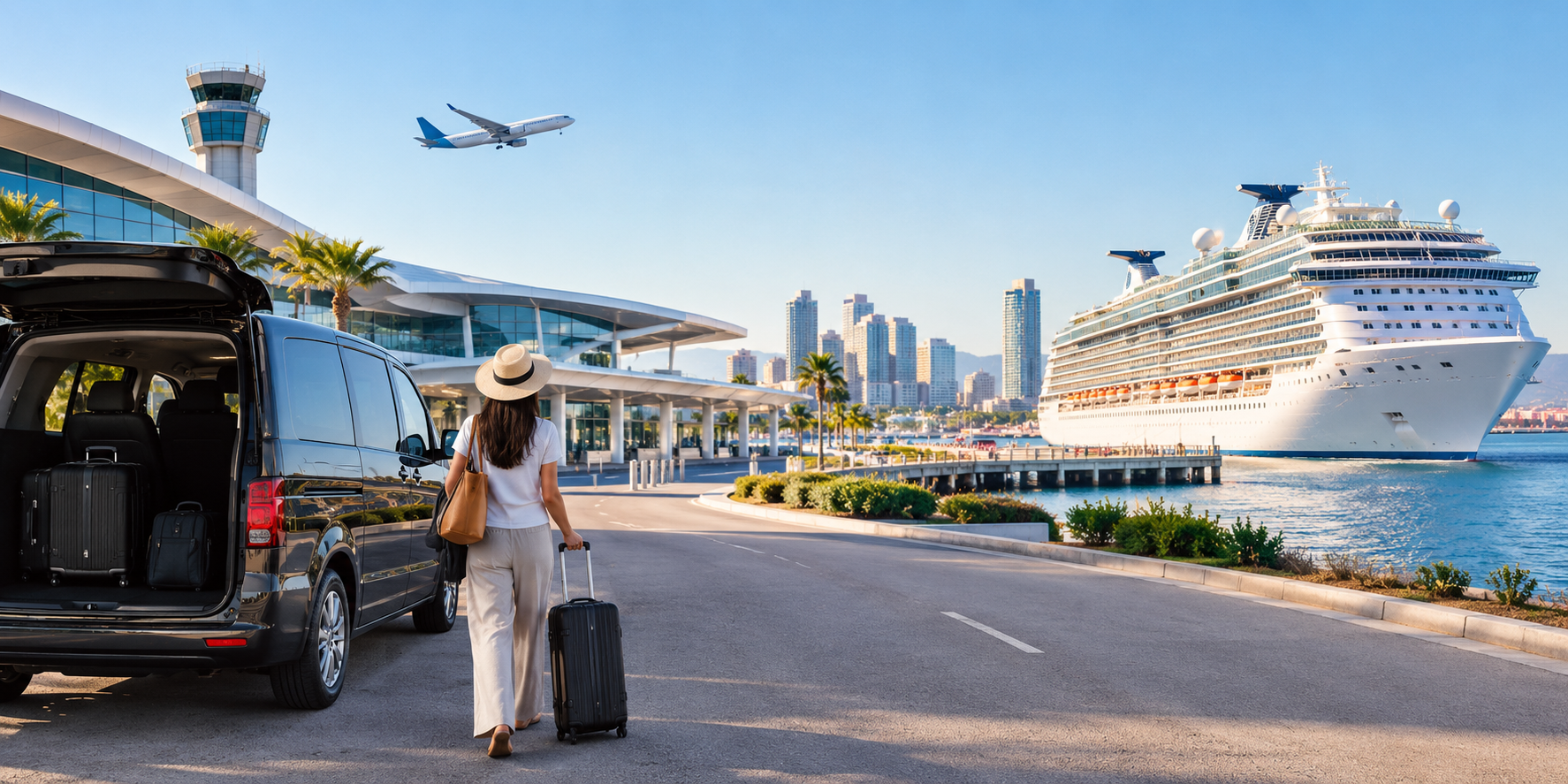
Few cruise cities make the trip from plane to ship as easy as San Diego. San Diego International Airport (SAN) sits right on the bay, and the cruise terminals are only about 3 miles away along North Harbor Drive. On a clear day you can almost see your ship from the runway. That short distance does not mean you should wing it, though. Embarkation day is busy, the airport has two terminals with different pickup areas, and the Port of San Diego runs two separate cruise terminals. Knowing exactly where to go saves time, money, and stress before your vacation even starts.
This guide walks you through the San Diego airport-to-cruise-port journey step by step. You will learn how each airport terminal works, which cruise terminal your ship uses, and how every airport to cruise port transfer option compares on cost, speed, and convenience. We also cover the return trip, timing tips, and answers to the most common questions about San Diego cruise transportation.
San Diego Airport to Cruise Port at a Glance
The drive from SAN to the cruise terminals takes roughly 10 to 15 minutes in normal traffic. Allow 20 to 30 minutes on a busy embarkation morning when several ships are in port. Here is how the main options compare.
| Option | Approx. cost | Travel time | Best for |
| Rideshare (Uber, Lyft) | 15–30 per ride | 10–20 min | Couples and small groups who want speed |
| Taxi | 20–30 per ride | 10–20 min | Travelers who prefer a metered, no-app ride |
| Cruise line transfer | 20–35 per person | 20–45 min incl. waiting | First-time cruisers who want a hand-held experience |
| Private car or shuttle | 50–120 per vehicle | 10–20 min | Families, large groups, lots of luggage |
| MTS public bus (Route 992) | About $2.50 per person | 20–35 min plus a short walk | Budget travelers with light luggage |
| Walking the bayfront | Free | 60–75 min | Only if you arrive the day before with minimal bags |
Prices are approximate and change with demand, surge pricing, and season. Check current rates in your app or with your provider before you travel.
Know Your Terminals Before You Land
The single most useful thing you can do before flying in is confirm two details: which airport terminal you arrive at, and which cruise terminal your ship departs from. Both are printed on your boarding pass and cruise documents.
San Diego International Airport (SAN)
SAN has two passenger terminals on the north side of the bay, both reached from North Harbor Drive.
-
Terminal 1 is the airport's newly rebuilt terminal. The first phase of the new Terminal 1 opened in September 2025, with more gates following in later phases. It serves Southwest and several other carriers.
-
Terminal 2 is the larger terminal and is split into Terminal 2 East and Terminal 2 West. It handles most major domestic carriers plus the airport's international flights.
Airline terminal assignments can shift, especially while construction continues, so always check your airline's page or the SAN website before you fly.
Port of San Diego cruise terminals
San Diego has two cruise terminals, side by side on the downtown waterfront.
-
B Street Cruise Ship Terminal at 1140 North Harbor Drive is the main terminal and handles most departures.
-
Broadway Pier Cruise Ship Terminal at 1000 North Harbor Drive sits just to the south and is used when a second ship is in port or for certain sailings.
The two terminals are a short walk apart, but telling your driver the correct one avoids a confusing drop-off in heavy traffic. Your cruise line's boarding documents name the terminal for your sailing.
Terminal 1 to the Cruise Port: Step by Step
Arriving at Terminal 1 puts you closest to the cruise port, since it sits at the eastern end of the airport nearest downtown.
-
Collect your bags. Head to baggage claim on the arrivals level. If you booked a cruise line transfer, look for a representative holding a sign with your cruise line's logo near the claim area.
-
Choose your ride. Follow the overhead signs for your transportation type. Taxis, app-based rides, and shuttles each have their own marked pickup zones at the curb or in the transportation area across from the terminal.
-
Request your rideshare at the right moment. Wait until you have your bags in hand, then open Uber or Lyft. The app will direct you to the designated Terminal 1 pickup point, so check the pin before you walk.
-
Give the exact destination. Enter "B Street Cruise Ship Terminal" or "Broadway Pier Cruise Ship Terminal" rather than a general downtown address.
-
Ride along Harbor Drive. Your driver heads east on North Harbor Drive past the Coast Guard station and Spanish Landing. The trip usually takes 10 to 15 minutes.
-
Drop off and check bags. Porters at the cruise terminal take your checked luggage curbside. Keep your carry-on with medications, documents, and valuables.
Because Terminal 1 is newer and still expanding, curbside layouts may change. Follow the signs on the day rather than relying on old maps or videos.
Terminal 2 to the Cruise Port: Step by Step
Terminal 2 is the busier of the two terminals, so the arrivals curb and pickup areas can be crowded at peak times. A little planning keeps you moving.
-
Note whether you are at Terminal 2 East or West. Baggage claim and exits differ slightly between the two halves. Your gate number and the airport signs will tell you which side you are on.
-
Pick up your luggage. Cruise line transfer staff usually wait near baggage claim or just outside the arrivals doors. If you cannot find them, call the number on your transfer voucher.
-
Head to the right pickup zone. Taxis line up at the marked taxi stand on the arrivals curb. App-based rides use a separate designated pickup area, which may be across the roadway or near the parking plaza. Your app shows the exact spot.
-
For the bus, find the Route 992 stop. The MTS Route 992 bus stops at the airport terminals and heads downtown. Ask for the stop closest to Broadway and Harbor Drive, then walk a few blocks to the cruise terminal.
-
Allow a few extra minutes. Terminal 2 sits farther west, so the drive is a few minutes longer than from Terminal 1. Plan on 12 to 20 minutes door to door by car.
-
Confirm your cruise terminal on arrival. Tell your driver whether you need B Street or Broadway Pier, and look for your ship's name on the terminal signage.
If you land with lots of time before boarding opens, Terminal 2 has more food and seating options than the cruise terminal. It can be a comfortable place to wait before you head over.
Airport to Cruise Port Transfer Options Compared
Every airport to cruise port transfer in San Diego is short, so the right choice depends more on your group size, luggage, and budget than on distance.
Rideshare: the fastest all-rounder
Uber and Lyft are the most popular choice for San Diego cruise transportation. Rides are quick to book, and fares for this short trip are usually modest. Surge pricing can spike on busy embarkation mornings, so compare both apps. Choose an XL vehicle if you have more than two large suitcases.
Taxi: simple and metered
Taxis wait at a marked stand outside each terminal, so there is no app or waiting for a driver to arrive. Fares are metered and typically land in the $20 to $30 range for this trip. Taxis are a good backup when rideshare prices surge.
Cruise line transfers: the hands-off choice
Most cruise lines sell airport transfers when you book or through your online cruise account. A representative meets you at the airport, loads your luggage, and drops you at the correct terminal. The trade-off is cost per person and waiting for the coach to fill. For a family of four, rideshare is usually far cheaper.
One big benefit: if your flight is delayed and you are on the cruise line's transfer, the line knows you are coming. That peace of mind matters on tight schedules.
Private car service or shuttle
Pre-booked private cars and shared shuttles suit families, groups, and travelers with mobility needs. A flat rate per vehicle often beats per-person transfer pricing for groups of four or more. Book ahead and confirm the meeting point at your specific terminal.
MTS public bus: the budget option
Metropolitan Transit System (MTS) Route 992 links the airport terminals with downtown San Diego. The fare is about $2.50, making it by far the cheapest option. You will need to walk a few blocks from the downtown stop to the cruise terminal, so it works best with a rolling suitcase and a light load.
Walking or biking the bayfront
The waterfront path from the airport to the cruise terminals is flat and scenic. It is roughly 3 miles, or about an hour on foot. This only makes sense if you arrive a day early, check into a hotel, and stroll over with minimal luggage.
Rental car: rarely worth it
Picking up a rental means a shuttle ride to the Rental Car Center, then returning it before you sail. Cruise parking near the terminal also adds a daily fee. Skip the rental unless you are touring Southern California before your cruise.
Timing Your Embarkation Day Transfer
The smartest move is to fly in the day before your cruise. Flight delays and cancellations are the number one reason cruisers miss their ship, and ships do not wait for independent travelers.
If you must fly in on embarkation day, follow these rules:
-
Book a morning arrival. Aim to land by 11:00 a.m. for a typical 4:00 p.m. sailing. That leaves a buffer for delays, baggage claim, and the transfer.
-
Know your boarding window. Most lines assign check-in times and require you to be on board 60 to 90 minutes before departure. Your cruise documents list the exact all-aboard time.
-
Avoid tight connections. A missed connection in another city can wipe out your cushion entirely.
-
Pack a day bag. Checked luggage may not reach your cabin until evening, so carry swimwear, medications, and a change of clothes.
Arriving the day before
An overnight stay turns transfer day into the easy part of your trip. Many downtown, Little Italy, and Harbor Island hotels are just minutes from the cruise terminals, and some offer cruise shuttles or luggage help. The next morning, a short rideshare or even a walk gets you to the pier with time to spare.
The Return Trip: Cruise Port to San Diego Airport
Disembarkation day runs on the same short route in reverse, but the timing is trickier. Ships usually dock early in the morning, and guests leave in assigned groups between about 7:00 and 10:00 a.m.
-
Book flights after noon. A departure after 12:00 p.m. gives you time to disembark, clear customs (on sailings that visit Mexico or other foreign ports), and get through airport security.
-
Expect a rideshare rush. Thousands of passengers request rides at once. Taxis queue at the terminal and are often quicker during the peak hour.
-
Consider self-assist disembarkation. If you can carry all your own bags, many lines let you walk off first. That puts you at the front of every line.
-
Use the cruise line's airport transfer. Some lines also offer luggage programs that check your bags through to your flight. Ask guest services early in the cruise.
-
Confirm your departure terminal. Tell your driver your airline so they drop you at Terminal 1 or Terminal 2, and East or West, correctly.
Insider Tips for San Diego Cruise Transportation
-
Screenshot your documents. Save your boarding pass, cruise terminal name, and transfer voucher offline in case your phone loses signal.
-
Tag your luggage before you land. Print your cruise line's luggage tags at home and attach them at the airport. Porters can then take bags straight from your car.
-
Tip the porters. A tip of $1 to $2 per bag is customary for the curbside porters at the cruise terminal.
-
Watch for multi-ship days. When two ships sail on the same day, Harbor Drive gets congested. Add 15 minutes to your plan.
-
Check for events. Major conventions and Petco Park games can slow downtown traffic. A quick look at the local calendar helps.
-
Split rides smartly. Groups of four or more often save money with one XL rideshare or a private van instead of per-person transfers.
-
Keep cash handy. Small bills help for tips and as a backup if a card reader fails.
-
Stay flexible. Construction around the airport can move pickup zones. Follow the latest signage and your rideshare app's pin.
Frequently Asked Questions
How far is San Diego airport from the cruise port?
The cruise terminals are about 3 miles from San Diego International Airport. The drive along North Harbor Drive takes 10 to 15 minutes in normal traffic.
What is the cheapest way to get from San Diego airport to the cruise port?
The MTS Route 992 bus is the cheapest option at about $2.50 per person. You will need to walk a few blocks from the downtown stop to the cruise terminal.
Is Uber or a taxi better for an airport-to-cruise-port transfer?
Both work well. Rideshare is often slightly cheaper, while taxis are faster to grab when apps show surge pricing or long waits.
Should I book the cruise line's transfer?
Book it if you want a guided, worry-free experience or are flying in on embarkation day. For families and groups, rideshare or a private car usually costs less.
Can I walk from the airport to the cruise terminal?
Yes, the bayfront path is about 3 miles. It is only practical with very light luggage and plenty of time, ideally the day before you sail.
Which cruise terminal does my ship use?
Most ships sail from the B Street Cruise Ship Terminal, while some use the Broadway Pier terminal next door. Your cruise documents confirm the terminal for your sailing.
How early should I arrive at the cruise port?
Arrive at your assigned check-in time. Most lines require you to be on board at least 60 to 90 minutes before departure.
Conclusion: Start Your Cruise Stress-Free
The San Diego airport to cruise port trip is one of the shortest in the cruise world, and with a little preparation it is also one of the easiest. Confirm your airport terminal and your cruise terminal, pick the transfer that fits your group and budget, and give yourself a healthy time buffer.
For most travelers, a rideshare or taxi offers the best balance of speed and value. Families and large groups often do better with a private car, while budget travelers can ride the bus for a few dollars. Whichever airport-to-cruise-port transfer you choose, arriving the day before is the best insurance for a smooth sail.
Ready to plan the rest of your trip? Bookmark this San Diego cruise transportation guide, share it with your travel companions, and check your cruise line's latest port instructions before you fly. Bon voyage!
Prices, terminal assignments, and transit details are approximate and can change. Verify with your airline, cruise line, San Diego International Airport, and MTS before you travel.