
Valle de Guadalupe Wine Tour from San Diego: Border Crossing, Passports & Timing
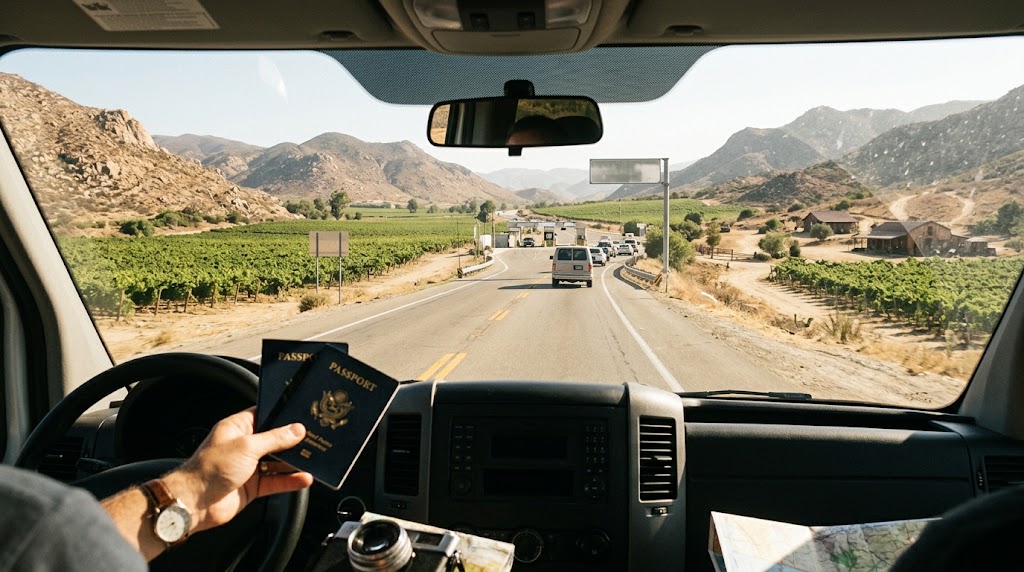
A Valle de Guadalupe wine tour from San Diego is one of the easiest international wine trips in the world. The valley sits roughly 90 miles south of downtown San Diego, about two hours away on a good day. You can sip Nebbiolo at breakfast-hour tastings, eat a long lunch under the oaks, and be home before bedtime. The catch is the border. Passports, crossing points, wait times, and timing decide whether your day feels relaxed or rushed. Get them right, and the trip is effortless; get them wrong, and you can spend more time in a car line than in a tasting room. This guide covers everything you need to plan the day well. You'll learn which documents to carry, how the crossing works in both directions, when to go, and how to choose the right San Diego wine tour transportation for your group.
Why Valle de Guadalupe Is Worth the Trip from San Diego
Valle de Guadalupe produces most of Mexico's wine, and its quality has grown fast over the past two decades. The climate is Mediterranean, with hot days, cool Pacific breezes, and granite-rich soils. Those conditions suit bold reds such as Nebbiolo, Tempranillo, Cabernet Sauvignon and Grenache, plus crisp Chenin Blanc and Sauvignon Blanc. What sets the valley apart is the experience around the wine. Many wineries are small, family-run and architecturally striking, from reclaimed-wood tasting rooms to hilltop terraces. The food scene is just as strong, with open-fire "campestre" restaurants serving local seafood, olive oil and cheese.
The valley also offers great value compared with Napa or Temecula. Tasting fees are often lower, crowds are smaller on weekdays, and winemakers are frequently on site to pour. Well-known stops include Monte Xanic, L.A. Cetto, Adobe Guadalupe, Decantos, Bruma and Vena Cava, alongside dozens of boutique producers along the Ruta del Vino.
Passports and Documents: What You Need to Cross the Border
The most important rule is simple: you need valid travel documents to get back into the United States. Mexico rarely checks paperwork closely when you drive south, but US Customs and Border Protection (CBP) checks every person on the way north. Plan your documents around the return, not the departure.
Documents for US citizens
Under the Western Hemisphere Travel Initiative, US citizens re-entering by land need one of these WHTI-compliant documents:
| Document | Works for land crossing? | Notes |
| US passport book | Yes | Valid for all travel, including flights |
| US passport card | Yes | Cheaper; land and sea only, not air travel |
| SENTRI or Global Entry card | Yes | Also unlocks faster lanes (SENTRI) |
| Enhanced driver's license | Yes | Issued by only a few states; standard California licenses do not qualify |
| Birth certificate + ID | Children under 16 only | Adults need a WHTI document |
A standard driver's license alone is not enough for adults. Carry the original document, not a photo or photocopy.
Documents for non-US citizens
Green card holders should carry their Permanent Resident Card and, ideally, their passport. Visitors from other countries need a valid passport and the right US visa or ESTA status to re-enter. Check that a short trip to Mexico won't affect your US entry status before you go.
Mexico's tourist permit (FMM)
Mexico's immigration agency (INM) issues a tourist permit called the FMM. Rules for short visits to Baja California have changed several times, and the Valle de Guadalupe sits beyond the narrow border strip. Check the latest INM guidance before your trip, or ask your tour operator, since reputable companies track these changes for their guests.
Traveling with children
Children under 16 who are US citizens can re-enter with a birth certificate, though a passport card is easier. If a child travels with only one parent, carry a signed consent letter from the other parent. Border officers may ask for it.
Crossing into Mexico: Ports of Entry and Routes
Heading south is usually quick, often 10 to 30 minutes. Most drivers pass a traffic light; a green light means go, while red means a brief secondary inspection. Three ports of entry serve a Valle de Guadalupe wine tour from San Diego.
| Port of entry | Best for | Route to the valley | Typical drive after crossing |
| San Ysidro | Fastest road access from downtown San Diego | Federal Highway 1D (scenic toll road) to Ensenada, then Highway 3 north | About 1.5 hours |
| Otay Mesa | Avoiding downtown Tijuana congestion | Connects to Highway 1D or the Tecate road | About 1.5 hours |
| Tecate | Calmer crossing, direct inland route | Highway 3 south through the Ruta del Vino | About 1 hour |
The coastal route via Tijuana
The San Ysidro route follows the Pacific coast on the Highway 1D toll road through Rosarito. Ocean views make it the classic choice, and the road is well maintained. Keep pesos or US dollars for the toll booths, which usually accept both.
The inland route via Tecate
The Tecate crossing is smaller and often quieter, though it keeps shorter hours than San Ysidro. Highway 3 runs directly south into the north end of the valley. Many drivers like to go down one way and return the other, depending on live wait times.
Why the route matters
Your choice of crossing affects both legs of the trip. A good driver checks live CBP wait times before committing to a return port. That one decision can save an hour or more at the end of a long tasting day.
The Return Crossing: Getting Back into the US
The northbound crossing is where most of your travel time goes. Waits at San Ysidro and Otay Mesa can run from 30 minutes to three hours or more. Sunday afternoons and holiday weekends are the worst.
Lane types explained
-
General lanes: open to anyone with valid documents; usually the longest wait.
-
Ready Lanes: for travelers whose documents all carry RFID chips, such as passport cards, SENTRI cards and enhanced licenses. They are often noticeably faster.
-
SENTRI lanes: the fastest option, but every person in the vehicle must be a SENTRI member and the vehicle must be registered.
This last rule catches many groups out. A driver with SENTRI cannot use the lane if even one passenger lacks membership.
What to expect at the booth
Have every passenger's document in hand before you reach the officer. Remove sunglasses and hats, and answer questions plainly. Officers will usually ask where you went and what you are bringing back.
Bringing wine home
California residents can generally bring back one liter of alcohol per adult duty-free, and more if you declare it and pay duty and state tax. Always declare every bottle. Undeclared alcohol can lead to fines and seizure, while declared extra bottles usually cost only a small amount.
Avoid fresh fruit, many meats and certain plants, which agriculture inspectors may confiscate. Packaged cheese, olive oil and sealed foods are generally fine, but declare them too.
Timing Your Trip: Season, Day and Departure Time
The best Valle de Guadalupe wine tour from San Diego leaves early, runs midweek, and avoids the Sunday return rush. Timing affects the border, the crowds and the weather all at once.
Best season to visit
|
Season |
What to expect |
|
Spring (March–May) |
Green hills, mild weather, fewer crowds; a favorite with locals |
|
Summer (June–August) |
Hot afternoons, often above 90°F; harvest energy builds |
|
August |
Fiestas de la Vendimia, the harvest festival; busy, festive and pricier |
|
Fall (September–November) |
Warm days, post-harvest calm, excellent conditions for touring |
|
Winter (December–February) |
Cool and quiet; some wineries shorten hours |
If you plan to visit during the harvest festival, book tastings, restaurants and transportation weeks ahead.
Best day of the week
Tuesday through Thursday are ideal. Wineries are calmer, tasting rooms are easier to book, and return waits are usually shorter. Friday works well too, while Saturday brings crowds and Sunday brings the longest border lines.
Check opening days before you choose a date. Some smaller wineries and restaurants close on Mondays or Tuesdays.
Best departure and return times
Leave San Diego between 7:00 and 8:00 a.m. This beats morning traffic into Mexico and gets you to the first tasting soon after opening. Most wineries open around 10:00 or 11:00 a.m.
Aim to leave the valley by 3:00 or 4:00 p.m. That puts you at the border before the evening peak. If you stay for dinner, expect a later and possibly longer crossing.
San Diego Wine Tour Transportation: Self-Drive, Shuttle or Chauffeur?
For most visitors, a Valle de Guadalupe chauffeur service is the safest and most relaxing way to do the day. Here is how the main San Diego wine tour transportation options compare.
| Option | Pros | Cons | Best for |
| Drive yourself | Full flexibility; lowest direct cost | Mexican auto insurance required; someone must stay sober; navigation and border stress | Experienced Baja drivers who won't be tasting |
| Group shuttle tour | Affordable; no driving; fixed itinerary | Set schedule; shared vehicle; limited winery choice | Solo travelers and budget trips |
| Private chauffeur service | Door-to-door from San Diego; custom winery list; bilingual help; everyone can taste | Higher cost per vehicle | Couples, groups, celebrations, corporate outings |
The hidden costs of driving yourself
Your US auto insurance generally does not cover you in Mexico, so you must buy Mexican liability insurance. Mexico also enforces drunk-driving laws strictly, and roadside checkpoints are common. Add unfamiliar roads, toll booths and the long return line, and the designated driver's day becomes work.
Why a Valle de Guadalupe chauffeur service makes sense
A professional chauffeur handles the parts of the trip that cause stress. Experienced drivers know which port of entry is moving, the best routes through the valley and which wineries need reservations. Many also hold SENTRI or know how to use Ready Lanes to shorten your return.
-
Door-to-door pickup from your San Diego home, hotel or the airport.
-
Licensed and insured vehicles and drivers for both countries.
-
Custom itineraries built around your taste, from big estates to boutique producers.
-
Bilingual support at wineries, restaurants and the border.
-
Everyone can taste, with no designated driver needed.
What to ask before booking
Ask whether the company holds the right permits and insurance for both the US and Mexico. Confirm what the price includes, such as tasting fees, lunch, tolls and gratuity. Finally, ask how they handle border waits and what documents every passenger must bring.
Sample One-Day Itinerary
This plan fits three wineries and a long lunch into a single day without rushing. Adjust times to the season and your crossing.
| Time | Stop | What happens |
| 7:30 a.m. | San Diego pickup | Chauffeur collects your group; documents checked before departure |
| 8:00 a.m. | Southbound crossing | Usually quick; coffee stop in Tijuana or Rosarito if time allows |
| 10:00 a.m. | Arrive in the valley | Short scenic drive along the Ruta del Vino |
| 10:30 a.m. | Winery 1 | Larger estate tasting, often with a cellar or vineyard tour |
| 12:00 p.m. | Winery 2 | Boutique producer, often with the winemaker pouring |
| 1:30 p.m. | Lunch | Long, farm-to-table meal at a campestre restaurant |
| 3:30 p.m. | Winery 3 | Final relaxed tasting; buy bottles to take home |
| 4:30 p.m. | Depart the valley | Driver checks live border waits and picks a port |
| 6:00–8:00 p.m. | Northbound crossing and drop-off | Declare wine purchases; back home for the evening |
Three wineries is the sweet spot. More than that leaves little time to enjoy each stop and pushes your return into the evening peak.
If you want more time, consider an overnight stay. The valley has boutique hotels and glamping-style lodges, and a Monday or weekday morning return avoids the worst border waits.
Practical Tips for a Smooth Day
A little preparation makes a big difference on a cross-border wine day. These tips cover the details most first-timers miss.
-
Book tastings ahead. Many popular wineries now require reservations, especially on weekends.
-
Carry some pesos. US dollars and cards are widely accepted, but pesos help with tolls, tips and small vendors, and often get better prices.
-
Check your phone plan. Many US carriers include Mexico roaming; confirm yours before you go to avoid surprise charges.
-
Dress in layers. Mornings can be cool and afternoons hot, and some wineries have dirt paths, so wear comfortable shoes.
-
Bring sun protection and water. Valley sun is strong, and hydration helps between tastings.
-
Pace yourself. Share tastings, eat a real lunch and spit when needed; the return border wait is easier when you feel good.
-
Use official channels only. Follow posted signs at the border and never agree to carry items for strangers.
Is it safe?
Valle de Guadalupe is a well-established tourist destination that welcomes many US visitors every year. Like any trip, use common sense: travel in daylight, stay on main highways and keep valuables out of sight. Check the US State Department's current travel advisory for Baja California before you go, and consider a professional driver who knows the area.
Frequently Asked Questions
How far is Valle de Guadalupe from San Diego?
The valley is roughly 90 miles from downtown San Diego. Expect about two hours each way without border delays, plus your crossing time on the return.
Do I need a passport for a Valle de Guadalupe wine tour from San Diego?
Adult US citizens need a passport book, passport card, SENTRI or Global Entry card, or an enhanced driver's license to re-enter the US by land. A standard driver's license is not enough.
Can I do the trip in one day?
Yes. A day trip is very common and comfortable if you leave early, visit about three wineries and head back by mid-afternoon.
What is the best San Diego wine tour transportation option?
For most groups, a private chauffeur service is best. It removes the need for Mexican car insurance and a designated driver, and an experienced driver can choose the fastest border crossing.
How long is the border wait coming back?
It varies widely, from about 30 minutes to over three hours. Weekday afternoons are usually shortest, and Sunday afternoons are usually longest. Ready Lanes and SENTRI lanes can cut the wait sharply.
How much wine can I bring back?
Generally one liter per adult duty-free. You can bring more by declaring it and paying a modest duty and California tax. Always declare every bottle.
Is a Valle de Guadalupe chauffeur service worth the cost?
For groups of two or more, it often is. Split among passengers, the cost is competitive with shuttle tours, and you gain a custom itinerary, door-to-door pickup and a stress-free border experience.
Plan Your Valle de Guadalupe Wine Tour from San Diego
A Valle de Guadalupe wine tour from San Diego rewards a little planning with a remarkable day. Bring the right documents, go midweek, leave early, and head home before the evening rush. Those four choices solve most border headaches before they start.
The smartest choice you can make is your San Diego wine tour transportation. American Town Car provides trusted Valle de Guadalupe chauffeur service to help manage the routes, reservations, and border crossing, so your only job is to enjoy the wine. Everyone in your group can relax, taste, and take in the views without worrying about the drive.
Ready to explore Mexico's wine country? Contact our team to book a private, door-to-door Valle de Guadalupe chauffeur service from San Diego, and let us plan the perfect day for you.