Wine Tour Etiquette: What to Wear, Do & Expect at Your First Tasting
What to Wear
Your footwear matters more than anything else on your packing list. Between the parking area and the tasting room, you'll be crossing gravel, uneven vineyard rows, and grass that's often still damp. Heels are, by a wide margin, the regret we hear about most at pickup.
Layers are your friend. Mornings in the Willamette Valley stay cool well into summer, and tasting rooms themselves vary wildly in temperature — some are open-air patios, others are cellar-cool stone buildings that never really warm up. A light jacket earns its keep by late afternoon too, once the sun drops behind the hills and the valley cools off fast.
One thing to leave at home: heavy perfume or cologne. Scent gets in the way of your sense of smell, and smell is doing most of the work when you taste wine. As for style, smart casual is a safe bet across the board. Nobody's checking for a dress code, but with the number of photo-worthy views at most stops, guests tend to dress a notch above what they'd wear running errands.
What Actually Happens at the Tasting Bar
If this is your first flight, here's the real sequence, no guessing required.
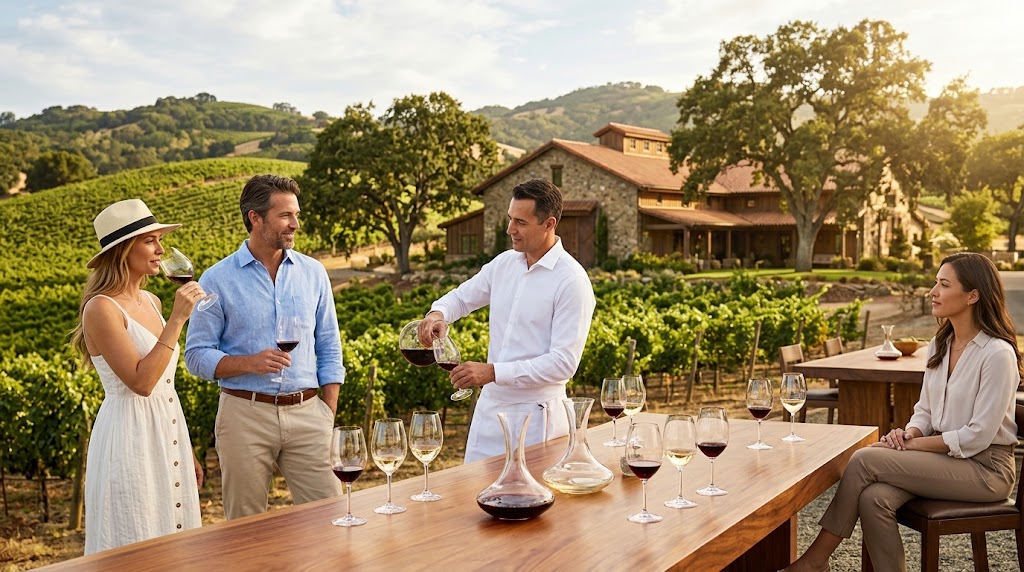
Start by looking, then swirling, then smelling. Tilt your glass against something white — a napkin does the job — to get a clear read on the color. Give it a gentle swirl to open up the aroma, and smell before you sip. It might feel like an unnecessary ritual, but it genuinely changes how the wine tastes.
Take small sips and slow down. You're not there to drain the pour — you're there to think about what you're tasting and ask a question if something catches your interest. And if you want to spit or dump some of your glass, that's completely standard. Every tasting bar keeps a dump bucket around for exactly that reason, and serious tasters lean on it heavily by their third or fourth stop of the day.
Don't be shy about asking questions, either. Something as simple as "what made you plant Pinot on this particular slope?" tends to get people talking, and pourers generally love discussing their wine — it's often the best part of the whole visit. Just remember to pace yourself across the entire day, not just within a single glass. A flight typically runs four to six small pours, so think of each stop as one chapter rather than the whole story.
What a Typical Stop Looks Like
Willamette Valley wineries tend to follow a similar rhythm. Expect a tasting fee, usually somewhere between twenty and forty dollars per person, which is frequently waived or credited toward a bottle purchase. You'll get a guided flight — four to six wines poured and explained by staff rather than something you select off a menu yourself.
Plan on spending forty-five minutes to an hour at each stop, longer if the view or a particular pour holds your attention. That's actually why American Town Car builds routes around three or four stops per day rather than six or seven — rushing through tastings misses the point of the trip entirely. And don't worry about sales pressure. Staff will typically offer once, near the end of your flight, and a simple "not today, thank you" is a completely normal response.
Etiquette When You're Tasting as a Group
Group tastings — birthdays, bachelorette parties, reunions — come with their own small set of norms, and we see them constantly given how many groups we drive through the valley.
If people in your group taste at different speeds, it's fine to split off quietly. Some guests linger over every pour; others move faster. Both are completely normal, just keep the volume down out of respect for other guests who are trying to concentrate. When a winery allows it, having one person handle the tasting fee for the whole group speeds things up at the counter for everyone. And save the celebration energy — toasts, photos, loud stories — for the patio rather than the tasting bar itself, since other guests inside are usually there to focus on the wine.
The Mistakes We See Most Often
A few missteps come up again and again. Sandals and heels on gravel and vineyard terrain top the list. Close behind is trying to cram five or six wineries into a single day and walking away unable to remember any of them clearly. Skipping water between stops is another common one — staying hydrated matters more on a tasting day than almost anything else on this list.
The last mistake is the one American Town Car exists to solve: driving yourselves. A chauffeured day means nobody in your group has to count pours or watch the clock with the drive home in mind.
Quick Etiquette FAQ
Do I have to buy a bottle if I taste it? No. Staff might offer once, and a polite decline ends the conversation there.
Can I bring my own snacks? Most wineries would rather you order from their own small menu or cheese board if they have one, but it's worth asking at the counter, since rules differ from place to place.
Is it rude to skip a wine in the flight? Not at all. Pouring staff would much rather you skip a style you don't enjoy than force yourself to finish it.
Ready for Your First Tasting?
At this point, you know more about wine tour etiquette than most people do by their fifth visit. The only thing left to figure out is logistics — and that's exactly where American Town Car comes in. Our Willamette Valley wine tour service takes care of the driving, the pacing between stops, and the route itself, so your only job on the day is the one described above: taste, ask questions, and enjoy it. And if you're still working out which sub-regions to explore, our Willamette Valley wine country map guide breaks down where each area sits and how to group them into one smooth, well-paced route.